
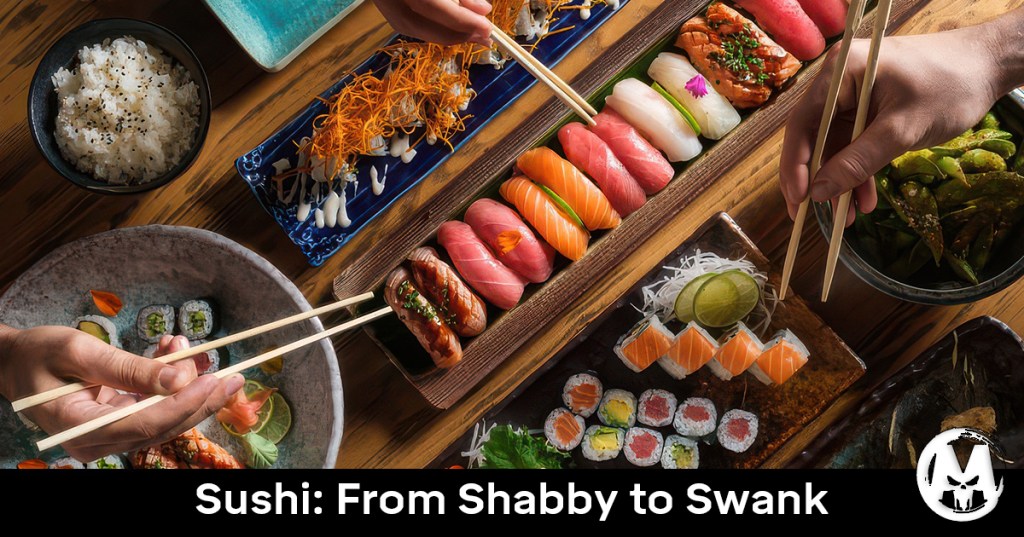
Summary:
Sushi’s journey from ancient preservation method to global cuisine was shaped not only by Japanese innovation but also by foreign influences, including China’s fermentation techniques, Norway’s salmon marketing, and America’s cultural reinvention.
From crisis-driven street food in Edo to upscale dining and fusion rolls worldwide, sushi’s story is one of resilience, adaptation, and globalization.
Edo, Japan. 1657.
One day, Edo (futurely known as Tokyo) will be a visionary city. A vibrating metropolitan tightly wrapped in neon-lit monoliths that’ll glow like a constellation of stars.
But for now, it’s a graveyard of ashes.
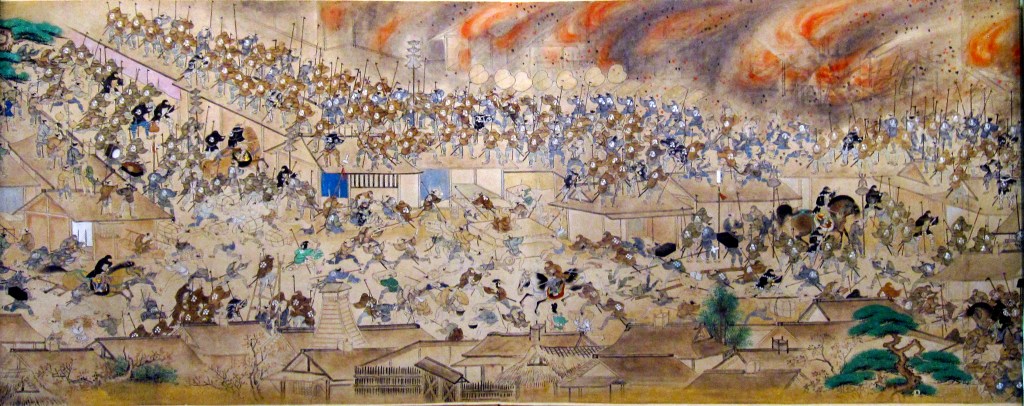
A great fire engulfed 60% of the city, incinerating the wood-and-paper homes, shrines, and temples. Over 100,000 lives, a third of the city’s population, are lost.
But Edo doesn’t die, it rises.
Ever determined, the city’s most famous inhabitant and Japan’s most powerful citizen, the Shogun, is committed to rebuilding. For the next several years, thousands of laborers swarm the city, slowly resurrecting and remodeling.
The worker surge creates an overnight demand for thousands of busy mouths to feed. But it can’t be just any food. It has to be something quick, something easy. And by decree of the authorities to prevent a second calamity, something that must be prepared without fire.
Necessity sparks innovation.
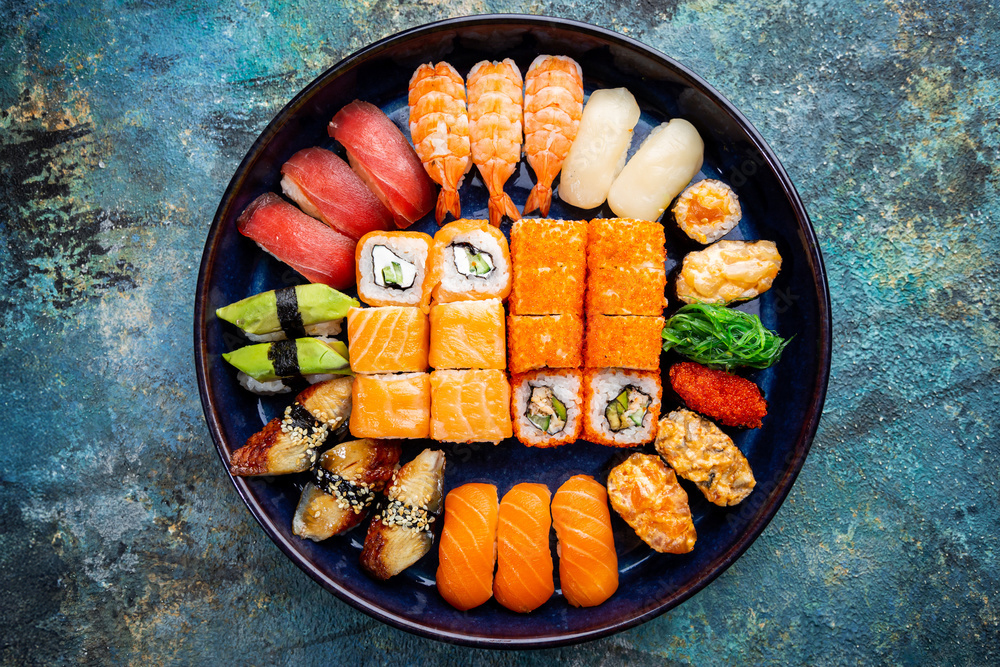
From the ashes of tragedy, a new Edo is built. From the absence of fire, the story of sushi grows from Japanese street food to global culinary cuisine.
Origin of Sushi
Every legend has an origin story. But sushi? It has two.
The first and most popular story begins in Southeast Asia 4th century BC along the Mekong River, a winding lifeline through Thailand, Cambodia, Laos, and Vietnam.

The rainy season flooded the rice fields, creating pathways for freshwater fish to swim upstream into the paddies— straight into the hands of waiting farmers. While harvested rice could be stored for months, the caught fish unfortunately spoiled in days.
4th-century BC farmers experimented by preserving the fish in liberal amounts of salt, creating an odorous, slimy goo that would eventually become the forefather of Asian fish sauce. Another method buried the fish into mounds of cooked rice and then sealed it inside an airtight jar. Lactic acid fermentation–the chemical reaction of bacteria breaking down rice into alcohol– kept the fish edible for months.
This method of preserving fish would eventually migrate north to China and then Japan.
Sushi’s second and lesser-known origin story bypasses Southeast Asia entirely and begins in China. This version of the story of sushi has nothing to do with fish or rice. Sushi’s origin begins with the general practice of fermenting and pickling food. China’s long history with fermented foods had already produced rice wine, soy sauce, and tofu when sushi was first mentioned.
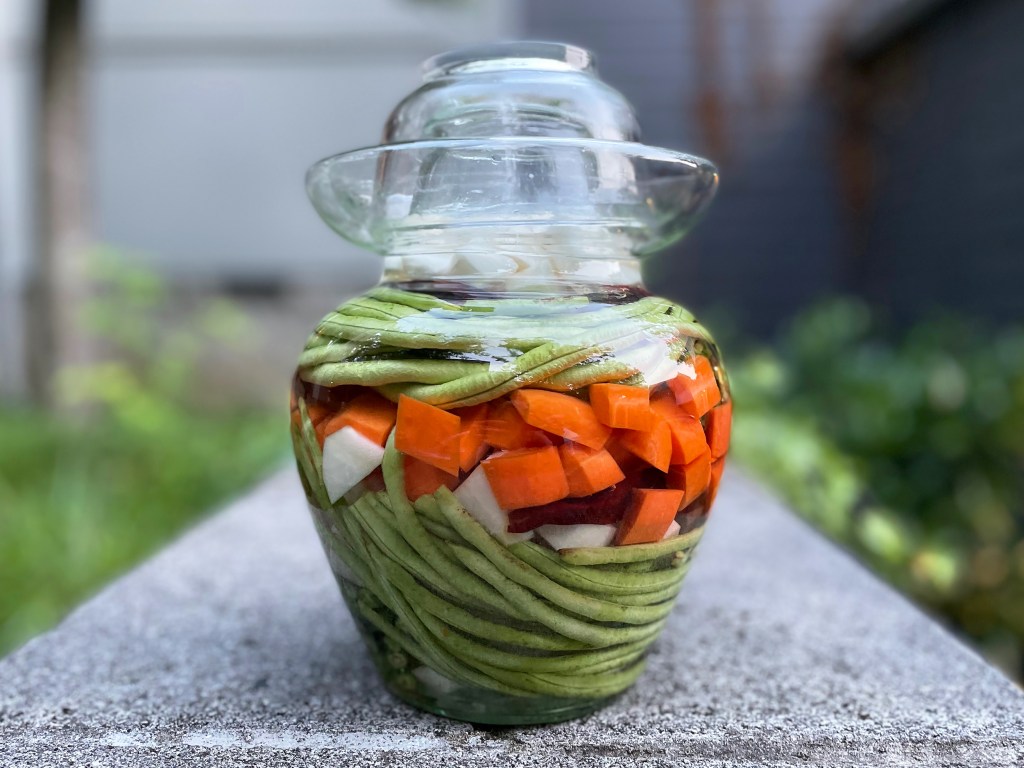
In ancient China, the term 鮓 (zha) referred to pickled food fermented in salt and rice. The term 鮨 (zhi) referred to fish preserved in salt. By the 3rd century, both terms became interchangeable, even though this version of sushi wasn’t always made with rice or fish.
Other types of grains like millet, buckwheat, and barley; and other types of seafood ranging from mussels, abalone, and shellfish, were commonly mixed and fermented.
This method of fermenting food would eventually migrate to Japan.
Regardless of whether sushi started in Southeast Asia or China, all roads began with preservation through fermentation and converged with fish and rice as the predominant version of sushi as it entered Japan.
Sushi in Japan
Japan. 8th century.
This chapter in the story of sushi wasn’t about pleasure. It was preservation.
Gutted fish, liberally salted, buried in mounds of rice, fermented for months– preserving the fish long after it should have spoiled. When it was time to consume, the eater scraped away and disposed of the rice while devouring and savoring the pungent fish. A version of this method exists today and is known as narezushi (fermented sushi).
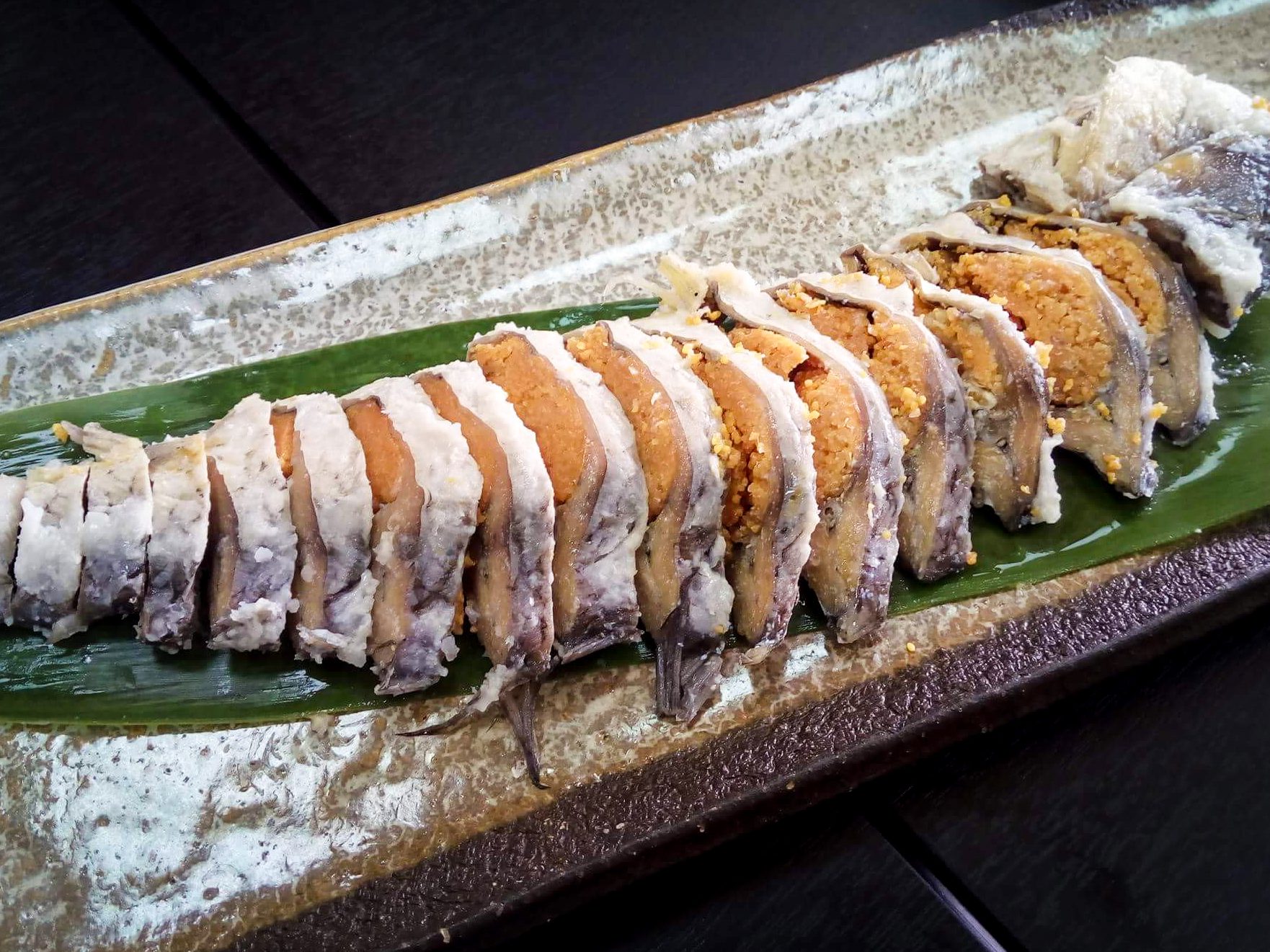
However, by the 16th century, people began eating the rice. The secret was to pack the rice and fish into boxes and press down with stones, extracting the full flavor of the fish while expediting fermentation from months to days. This method also still exists today and is known as hakozushi (boxed sushi).
By the middle of the 17th century, the real revolution happened: rice vinegar.
No more waiting. No more fermentation. When mixed with the rice and fish, it produced the same acidic taste. Japanese sushi could now be enjoyed on the same day. This method of making sushi was known as hayazushi (quick sushi).
By the 18th century, Edo (Tokyo) became the epicenter of the evolution of sushi. The Great Fire of Meireki of 1657–mentioned in the opening–spurred the growth of sushi in Edo and surrounding areas. As the political center of the Tokugawa Shogunate, Edo became a rapidly growing and bustling city, becoming the largest city in the world by the 1750s. Feudal lords, samurai, servants, merchants, craftsmen, farmers, laborers, monks, priests, prostitutes, beggars, and the rest of the social caste filled the streets.
To serve the hurried metropolitan life, food stalls and restaurants sprang to serve their needs. Because it did not need fire to prepare, sushi stalls were easier to set up than noodle stalls, thus proliferating on every street corner.
Sushi in Edo Japan started out as fast food.

Even in big city life, fast isn’t fast enough. Sushi during this time was made with rice and fish mixed with vinegar and pressed down with heavy stones for a few hours. By the 1800s, some sushi chefs eschewed the boxes and stones and began squeezing the sushi by hand.
Nigirizushi (hand-squeezed sushi) completed the 180-degree turn for the story of sushi. Sushi used to be a method to preserve fish to be eaten a few months later. Now, sushi could be eaten instantly.
This method of preparing sushi spread to the rest of Edo, eventually being called (marketed) as Edomae-zushi. And it could have stayed in Edo/Tokyo if not for another tragedy.
The Great Fire of Meireki in 1657 allowed sushi to grow in Edo. The Great Kanto Earthquake of 1923 spread it to the rest of Japan.
Edo, Japan. 1923.
First came the violent jolt crushing buildings to the ground. Then the towering tidal waves devoured all things man and manmade. Finally, fires, fanned by high winds, tore into wooden homes.
The Great Kanto Earthquake of 1923 took over 140,000 lives and destroyed nearly half of the city.
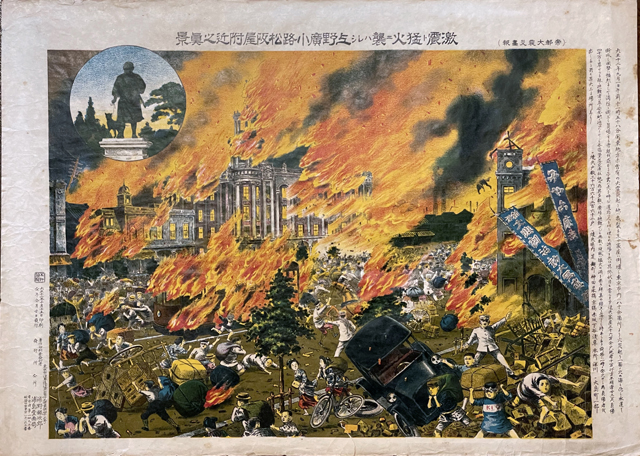
The devastation led many sushi chefs to relocate to different parts of Japan to restart their lives. They also spread the Edomae-zushi method to the rest of the country. What had once been a Tokyo specialty became Japan’s national dish.
While sushi is quintessentially regarded as Japanese. Foreign influence also shaped its story.
After World World II (1945), American occupation introduced the Japanese to a taste for fattier foods. While different cuts of tuna–toro, maguro, akami, etc.–are considered the popular and prized cuts of sushi today, in the early 20th century, tuna was considered a lowly fish, often used as filler for pet food.
Once the Japanese developed a palate for greasier food, tuna and its delectable fatty belly meat became part of sushi’s culture. Suddenly, tuna belly went from trash to treasure.
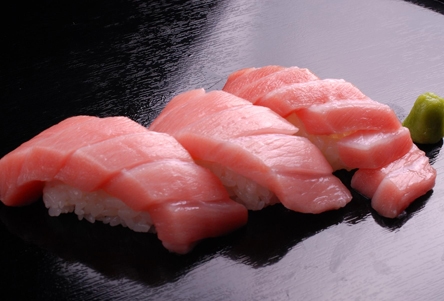
American occupation also had other long-lasting effects on sushi. Food rationing after the war limited topping selection. Sushi chefs responded by doubling up on what was available. Serving two pieces of nigiri is the standard that still exists today.
Finally, before the war, sushi stalls were a common sight around Tokyo area. Synonymous with low quality and deemed unsanitary, American authorities banned stalls. This drove inferior merchants to close and others to establish restaurants.
Once sushi transitioned from food stalls to indoor dining, it shed its humble beginnings and became elevated cuisine, completing a 180-degree turn from fast food to fine dining.
Sushi in America
Sushi started appearing in the American early mainstream lexicon in the 1960s and 70s. A curiosity, a novelty, it was sometimes described as a sandwich or cake.
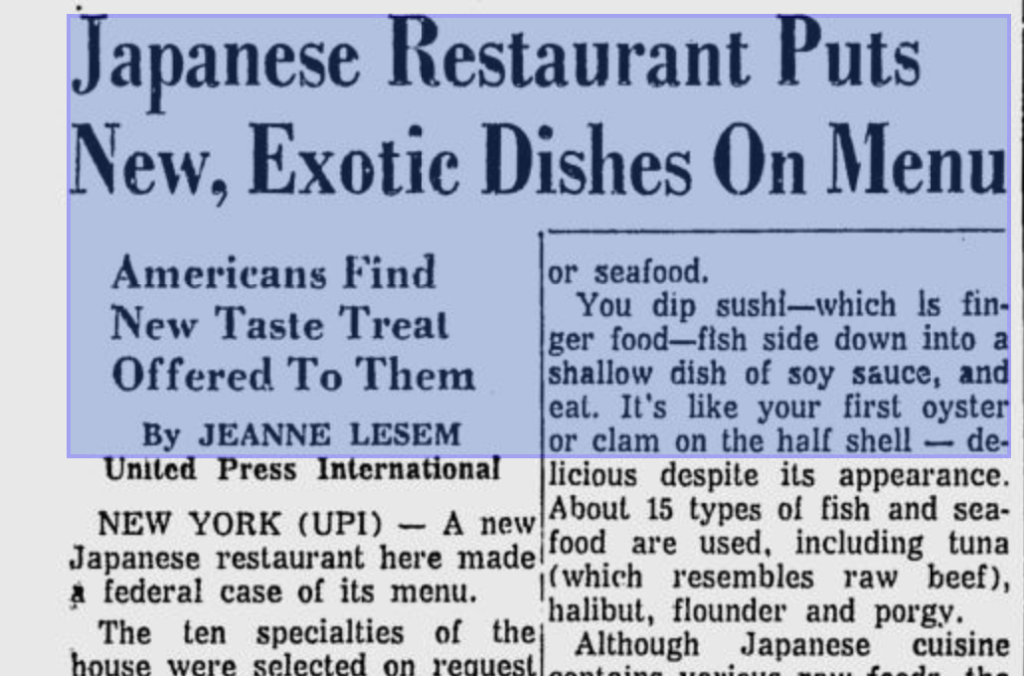
For most Americans, it was an exotic mystery. Raw fish? Seaweed? Rice with vinegar? Too foreign, too strange. Sushi would have stayed in the fringe category had it not been discovered by one of the biggest cultural influences of the 20th century: Hollywood.
Japanese businessmen in Los Angeles introduced sushi to their elite American colleagues–and soon, sushi wasn’t just food. It was artistic, elegant, and exclusive.
And in the 1970s and 1980s, no one did exclusive better than Hollywood celebrities.
Stars such as Yul Brynner, Richard Dreyfuss, Henry Winkler, and others became sushi regulars, embracing sushi as an in-crowd statement for the elite.
Influential people living in an influential state doing influential things– sushi trickled down to the masses and was ultimately championed by young, adventure-seeking, middle-class white folks.
The California White Rush had begun.
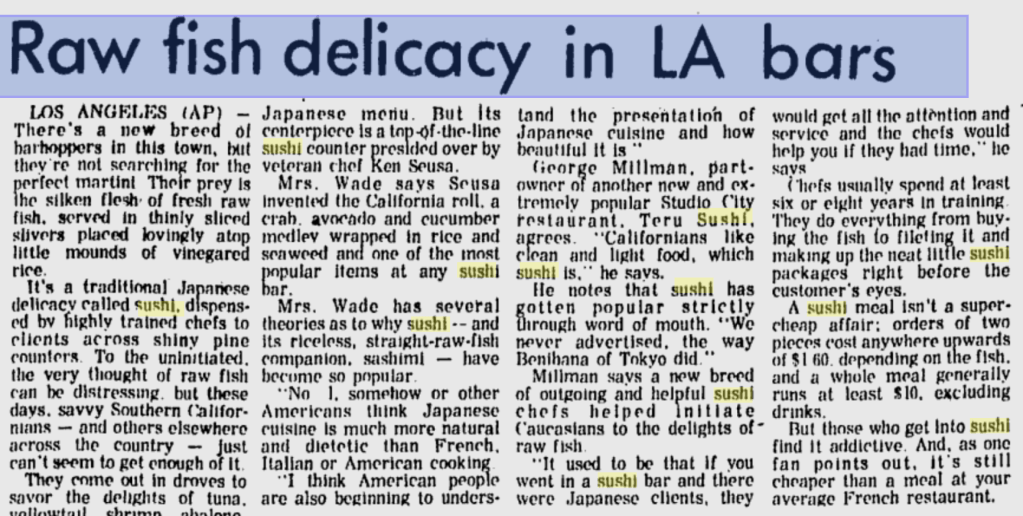
As sushi gained traction with the young, affluent, and adventurous, the 1980s Japanophilia boom fueled its rise even further.
- Shogun, a 12-hour TV mini-series about feudal Japan, was a ratings blockbuster, pulling in 115 million viewers.
- The Book of Five Rings, a 400-year-old samurai text, made the rounds in Wall Street, inspiring a generation of corporate warriors.
- Japanese electronics like the Sony Walkman and Nintendo Entertainment System reshaped American youth culture.
- Japanese cars like Toyota and Honda gained popularity during this time because of their high fuel efficiency and reliability.
- Japanese anime and anime style gained its foothold in the West. Popular kids cartoons of the time–Voltron, Thundercats, and Transformers brought Japan’s aesthetic to millions of kids.
By the 1990s and 2000s, sushi left the coast and swept across America. By 2010, when supermarket chains began carrying pre-packaged rolls, sushi’s mainstream transformation was complete.

It’s important to note that America wasn’t just a consumer of sushi but also a contributor to its story.
As previously mentioned, American occupation in Japan after WWII helped turn the lowly fatty tuna belly into a prized choice, created the two-piece nigiri system, and flipped sushi dining from street food to fine dining.
Perhaps America’s greatest contribution to sushi is the evolution of the sushi roll.
The California roll made sushi palatable to Americans who were queasy about ingesting raw fish and seaweed. In the late 1960s, Japanese sushi chefs in Los Angeles started making rolls with avocado, which mimicked the richness and mouthfeel of fatty tuna belly. They also inverted the sushi roll with the rice on the outside and the nori on the inside, thus inventing the uramaki (inside-out) roll. Paired with crab and creamy mayonnaise, this became a gateway for most Americans to try sushi and eventually level up to raw fish.
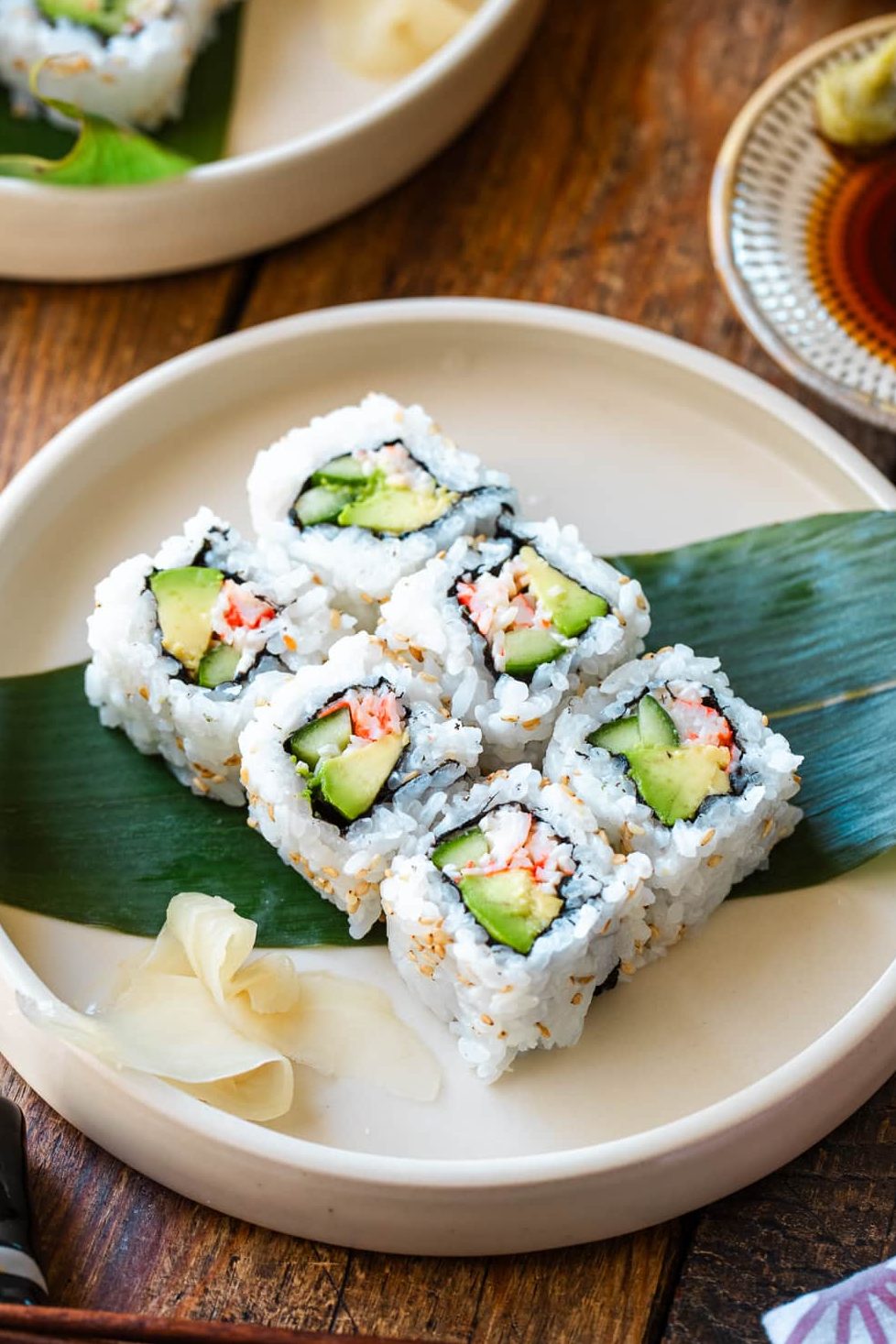
The American sushi roll became a renaissance across the country and eventually a global phenomenon:
- California roll – crab, avocado and cucumber
- Spicy tuna roll – tuna, spicy mayo, and sriracha
- Philadelphia roll – salmon, cream cheese, and cucumber
- Caterpillar roll – eel, cucumber, and avocado
- Spider roll – soft-shell crab, lettuce, and spicy mayo
American sushi also contributed to the popularity of sushi handrolls–cone-shaped, seaweed-wrapped rolls filled with any topping.
The wealth and depth of culinary diversity in America have led to many fusion dishes. The latest contribution to the story of sushi comes with the sushi burrito, a natural blend of Latin American and Japanese flavors.
America didn’t just adopt sushi. It transformed it.
Sushi worldwide
Today, sushi is everywhere. From Tokyo to Toronto, from high-end omakase counters to grab-and-go grocery packs. Sushi isn’t just Japanese; it’s a worldwide story shaped by countries across the globe.
Norway:
Salmon and sushi seem like a timeless pairing. But it wasn’t even on the menu with the Japanese until the 1990s.
Eating salmon with sushi wasn’t a Japanese idea. It was a Norwegian marketing invention.
In the 1970s, Norway pioneered commercial salmon farming. By the 1980s, they were incredibly successful–too successful–creating an overstock of salmon and even resorted to freezing them.
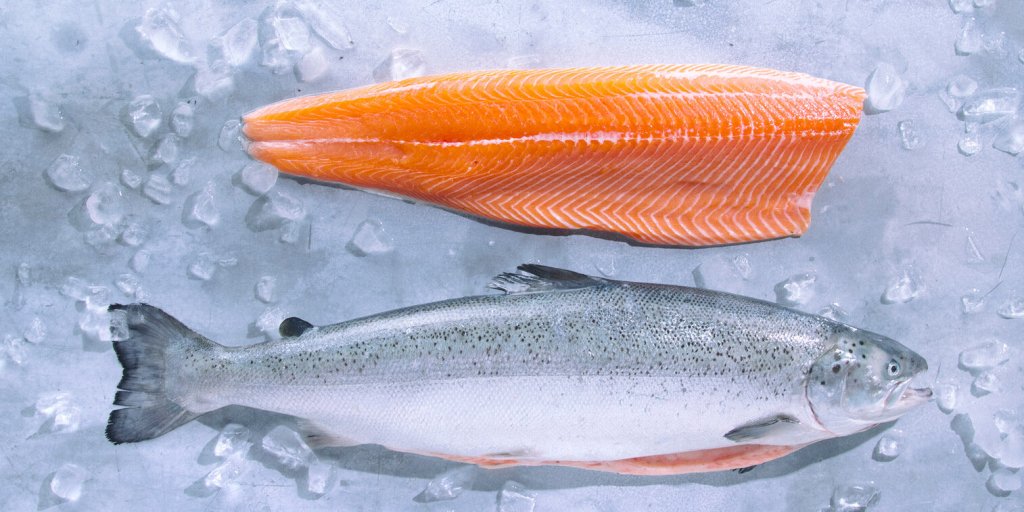
Norwegians needed a buyer fast.
Meanwhile, Japan in the 1980s reached its peak economic power. Soaring stocks, soaring technology, and with it, a growing appetite for premium seafood. But there was a problem: overfishing had decimated local stocks. Demand was climbing, but supply? Not so much.
So exporting salmon to Japan made sense for both sides, except for one problem.
Japanese people did not eat salmon raw. Pacific salmon were susceptible to parasites, so it was culturally ingrained to eat cooked salmon.
But Norway was desperate to sell, sell, sell. Enter: Project Japan.
The Norwegian seafood industry, backed by the government, launched an aggressive campaign to get Japan to fall in love with raw salmon. They pitched it as clean, farmed under stick controls, and just as buttery as bluefin tuna–but cheaper.
After 15 years of PR blitzes targeting importers, distributors, supermarkets, and restaurants, the tide turned.
By the mid-1990s, Japanese consumers were finally eating raw salmon. Now it’s one of the most popular sushi toppings in the world.
England:
Seaweed may not sound glamorous. But in Japan, it’s essential, especially nori, the paper-thin, ocean-grown wrap that holds sushi rolls together.
Today, it’s everywhere, but until the 1950s, getting seaweed was unpredictable.
Although Japanese seaweed farmers had been cultivating seaweed since the 1600s, most of the harvest depended on luck and prayers rather than science. Yields were inconsistent and unpredictable.
The breakthrough didn’t come from Japan. It came from Manchester, England.
Kathleen Drew-Baker, a British scientist with no ties to the sushi world, studied the lifecycle of red algae. In the 1940s, she learned how to cultivate porphyra—the species of red algae used to make nori—from spores.

Her discovery crossed oceans. Japanese scientists adapted her methods and applied them to their coastal ecosystems, resulting in a controlled, repeatable, and scalable way to grow seaweed.
The game of chance became science.
Kathleen Drew-Baker died unaware of her impact on one of the most valuable aquaculture industries in the world.
Although she never set foot in Japan, the Japanese didn’t forget. In Kumamoto Prefecture, on the shores of Ariake Bay, there’s a shrine in her honor. They call her “The Mother of the Sea.”
The Takeaways
1. Innovation is often born from constraint and catastrophe
The Great Fire of Edo (1657) kindled sushi’s rise in Tokyo. The Great Kanto Earthquake (1923) spread it to the rest of Japan. Post World War 2 (1945) pushed sushi to go indoors and eventually into fine dining.
As the old saying goes, “Necessity is the mother of all invention.” Companies shouldn’t view failure as endpoints but data points.
While we don’t need to glorify failure, we should stay grounded and extract the insights and use it to fuel our next best action.
2. Adaptation is adoption.
Sushi only went mainstream in America after chefs reimagined it for Western tastes– hiding the seaweed, using avocado, and softening the unfamiliar. They didn’t cling to tradition; they met customers where they were.
It’s a reminder that what feels obvious or perfect to us might not resonate with others. Until we truly understand the customer’s perspective—their hopes, hesitations, and hang-ups—we’re just spinning a sign at traffic that isn’t even looking.
3. Nothing ever grows in a silo.
Yes, sushi is undeniably Japanese—but its story is one of global collaboration, often accidental. From Norway’s salmon to England’s seaweed, America’s cultural influence to China’s fermentation techniques, many hands shaped what sushi is today.
Success is rarely the result of a single, obvious factor. Behind every outcome are hidden contributors—some small, some overlooked—that deserve recognition. When possible, honor the full picture. Always give proper attribution.
Side Stories
What role did refrigeration play on the story of sushi?
No refrigeration, no modern sushi. It’s that simple.
Refrigeration was the breakthrough that freed sushi from a local delicacy to a global phenomenon. It made it possible to store raw fish safely, transport it across continents, and preserve a wider variety of seafood. For sushi chefs, it meant consistency, freshness. They were no longer limited by time or temperature.
How did conveyor-belt sushi liberate sushi from the upper crust and from male superiority?
In postwar Japan, sushi was a male-dominated, upper-crust affair. High-end sushi bars were run by male chefs serving mostly male patrons, often without menus or visible prices. The atmosphere was exclusive, intimidating, and unwelcoming to outsiders, especially single women who didn’t fit the mold of a deferential date or wife.
Conveyor-belt sushi (kaiten sushi) changed that. It stripped away the formality and gatekeeping by letting plates of sushi glide past on a belt, each clearly priced and easily accessible. No need to speak to a chef. No need to worry about etiquette. Suddenly, sushi was affordable, transparent, and self-serve. It welcomed families, women, and everyday workers. It was sushi for all the people.
 Carpe Curious
Leave a comment